Evidence-Based Interventions for Osteoarthritis, Meniscal/Labral Lesions, Muscle/Tendon Strains, & Tendinitis with Michael T. Gross
Evidence-Based Interventions for Osteoarthritis download
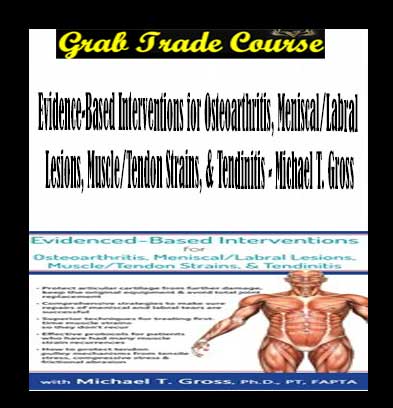
Protect articular cartilage from further damage, keep the original equipment & avoid total joint replacement
Comprehensive strategies to make sure repairs of meniscal and labral tears are successful
Superior techniques for treating first-time muscle strains so they don’t recur
Effective protocols for patients who have had many muscle strain recurrences
How to protect tendon pulley mechanisms from tensile stress, compressive stress & frictional abrasion
The content of this course will help clinicians with clinical decision-making to take your practice to an advanced level. Discussion topics are based on research that Dr. Gross has synthesized over the past 30 years of practice, research and teaching. You will leave able to determine the scientific basis to change practice patterns immediately as you return to patient care.
If you could confidently answer the questions below, imagine how it could impact your practice…
What hand should be used for cane use if a patient has knee varus versus knee valgus?
What are the appropriate clinical interventions for tendinopathies in instances where tendons wrap around tendon pulley mechanisms?
What happens when excessive pressures are transmitted across epiphyseal plates?
How do we help young patients prevent avulsion fractures of apophyses?
How do we help our patients prevent muscle strain recurrences?
What are the best detection methods for labral lesions at the hip or glenohumeral joints?
What are the best detection methods for meniscus lesions at the knee?
What are evidenced-based guidelines for interventions of knee meniscus lesions, as well as labral lesions of the hip or shoulder?
We ensure that the quality of the course is good, and we update them regularly to help you keep update.
If there is a problem you can not use, please let us know so we can fix it soon or if there is any notification, we will inform you immediately.
B. Shipping Method
After receiving your payment, we will send you a link to access and download the course. If our team is not in the office, please wait for us about 8 hours to come back.
C. Refund Policy
We do not accept refund after you got the link and download the course.